Stars You Can See Without a Telescope

What are the brightest and most famous stars you can see without a telescope? Find out everything you need to know with our guide!
You don’t need a telescope to enjoy the wonders of the night sky. In fact, some of the most spectacular stars in the universe can be seen with the naked eye. Across different seasons, the heavens are full of bright, colourful, and historically significant stars that are easily visible from Earth. For beginners, stars you can see without a telescope provide the perfect introduction to stargazing, and for experienced sky-watchers, they are valuable navigation aids – and timeless companions that never fail to inspire awe.
In this guide, we’ll take a look at the most famous stars visible without any special equipment. Along the way, you’ll learn what makes them shine so brightly, how to find them in the sky, and the stories that different cultures have told about them for thousands of years.
Why Are There So Few Stars You Can See Without a Telescope?

The night sky contains literally billions of stars, but only a tiny fraction can be seen with the naked eye. On a clear, dark night, away from city lights, most people can see around 2,500 to 3,000 stars. However, only the brightest stand out because they are either relatively close to Earth or extremely luminous.
Brightness is measured by a system called magnitude. The lower the magnitude number, the brighter the star appears. Sirius, for example, has a magnitude of -1.46, making it the brightest star visible from Earth. Other bright stars stand out because of their colour, which ranges from cool red to hot blue-white, giving the night sky a rainbow of subtle hues.
Understanding why some stars shine so brightly gives us a clue to their importance in stargazing. They serve as navigational markers, seasonal indicators, and even mythological figures in the sky.
Notable Stars You Can See Without a Telescope
Sirius: The Dog Star
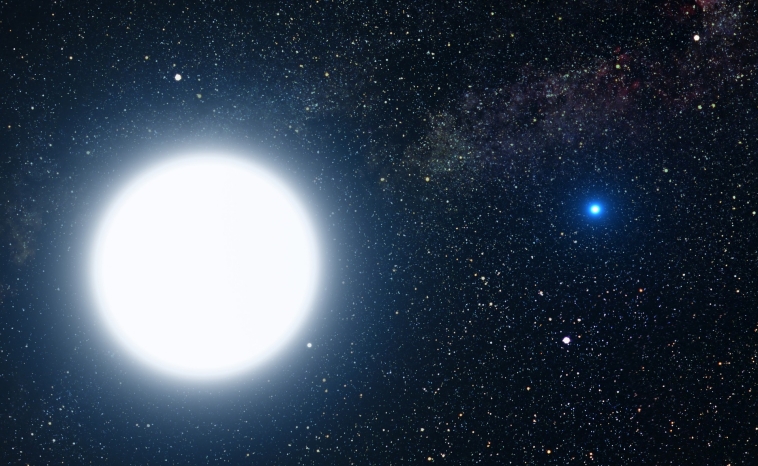
NASA, ESA and G. Bacon (STScI), Public domain, via Wikimedia Commons
NASA, ESA and G. Bacon (STScI), Public domain, via Wikimedia Commons
Sirius, in the constellation Canis Major, is the brightest star in the night sky. Its brilliance has fascinated humans since ancient times. In ancient Egypt, the rising of Sirius in the morning sky signalled the annual flooding of the Nile, a crucial event for agriculture.
Sirius is actually a binary system, consisting of Sirius A, a main-sequence star, and Sirius B, a faint white dwarf. Together, they create a system only 8.6 light-years away from us. To find Sirius, look south on winter evenings. It forms part of the Winter Triangle along with Betelgeuse and Procyon.
Its twinkling, almost sparkling appearance near the horizon is caused by Earth’s atmosphere, making it a mesmerising sight with the naked eye.
Betelgeuse: The Red Supergiant
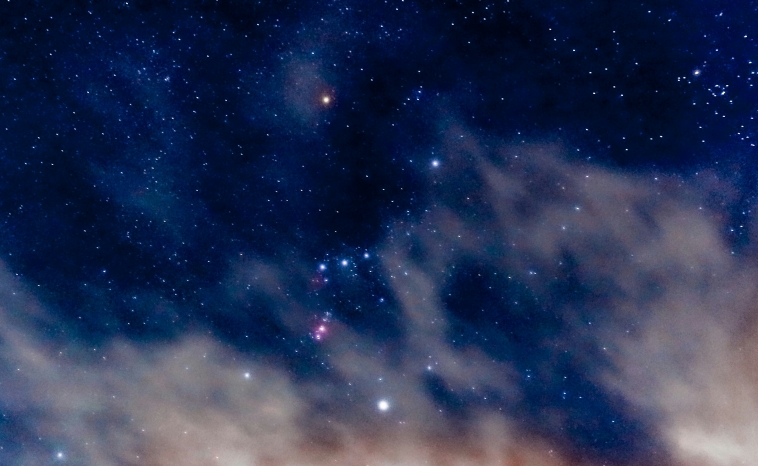
Betelgeuse is one of the most recognisable stars, located in the constellation Orion. Its reddish-orange glow makes it easy to identify. Betelgeuse is a red supergiant, nearing the end of its life. When it eventually explodes in a supernova, it will briefly outshine the Moon!
In mythology, Betelgeuse marks Orion’s shoulder. To spot it, look for the Orion constellation, which dominates winter skies in the Northern Hemisphere. Its reddish hue contrasts with the bright blue-white of Rigel, located on Orion’s opposite side.
Betelgeuse is also one of the largest stars visible to the naked eye. If placed at the centre of our Solar System, its size would engulf the orbit of Jupiter.
Vega: A Summer Beacon
Vega, in the constellation Lyra, is one of the brightest stars in the sky, and one you can easily spot in the summer months. It forms part of the Summer Triangle, along with Deneb and Altair.
Vega is a blue-white star only 25 light-years away. Its light has played a crucial role in scientific history. In fact, it was one of the first stars to have its spectrum recorded, and it served as a baseline for the magnitude system we use to measure star brightness.
In legend, Vega is often linked to the story of the weaver girl in Chinese mythology, separated from her lover (represented by Altair) by the Milky Way. Their reunion is celebrated each year in the Qixi Festival.
Altair: The Flying Eagle
Altair, part of the constellation Aquila, is another summer favourite. Along with Vega and Deneb, it forms the Summer Triangle. Altair is relatively close to Earth, only 16.7 light-years away, which is why it appears so bright.
The star spins rapidly on its axis, completing a rotation in just nine hours. This makes it significantly flattened at the poles compared to the equator. Altair’s brightness and position near the celestial equator make it visible from most places on Earth.
In mythology, Altair represents the herdsman who is separated from Vega by the celestial river of the Milky Way.
Deneb: The Tail of the Swan
Deneb, in the constellation Cygnus, is the farthest star in the Summer Triangle but still shines brightly thanks to its immense luminosity. It’s one of the most powerful stars you can see without a telescope.
Although Deneb is around 2,600 light-years away, it is about 200,000 times more luminous than our Sun. Deneb represents the tail of the swan in Cygnus, with the constellation forming a cross-like shape that’s easy to spot in the Milky Way during summer.
Deneb’s sheer scale makes it a favourite target for astronomers, but you don’t need a telescope to appreciate its brilliance in the summer night sky.
Polaris: The North Star
Polaris, or the North Star, is not the brightest star, but it is one of the most important. Located in the constellation Ursa Minor, it sits almost directly above the North Pole. This makes it a constant guide for navigation, as it remains fixed in the northern sky while other stars appear to rotate around it.
For centuries, sailors and explorers have used Polaris to determine direction. To find Polaris, locate the Big Dipper (Ursa Major) and follow an imaginary line moving upwards from the two stars at the edge of its bowl. The first bright star you’ll encounter is Polaris.
Polaris is actually part of a multiple-star system. The main star, Polaris A, is a yellow supergiant, orbited by two smaller companions.
Antares: The Heart of the Scorpion
Antares, the brightest star in Scorpius, is often called the rival of Mars because of its reddish colour. The name Antares means “against Ares”, referring to the Greek god of war.
Antares is a red supergiant located about 550 light-years away. Its dramatic hue and position make it stand out in summer skies. Antares marks the heart of the scorpion in the constellation Scorpius, which is best seen in southern parts of the Northern Hemisphere and across much of the Southern Hemisphere.
The star’s distinct colour helps beginners learn to identify different star temperatures, as red stars are cooler than blue or white stars.
Capella: The Goat Star
Capella, in the constellation Auriga, is a bright yellow star visible during winter evenings. It’s actually a system of four stars, grouped into two pairs that orbit each other.
Capella has been an important star in folklore, often associated with a goat in various mythologies. Its golden colour is similar to our Sun, making it a useful comparison point. The star’s steady brightness and prominence also make it a reliable landmark for stargazers. To find Capella, look high overhead during winter in the Northern Hemisphere.
Procyon: The Little Dog Star
Procyon, in the constellation Canis Minor, is one of the stars that form the Winter Triangle along with Sirius and Betelgeuse. It rises shortly before Sirius, the Dog Star, hence its name, which means “before the dog”!
Procyon is a binary system, consisting of a yellow-white star and a faint white dwarf companion. And at just over 11 light-years away, it’s one of the closest bright stars to Earth.
For beginners, Procyon’s place in the Winter Triangle makes it easy to identify, and its pale colour provides a contrast to the deep red of Betelgeuse.
Regulus: The Heart of the Lion
Regulus, the brightest star in Leo, is known as the “heart of the lion”. It sits along the ecliptic, the path the Sun appears to take across the sky. This makes it regularly aligned with the Moon and planets.
Regulus is actually a multiple-star system with at least four components. Its brilliant blue-white light stands out in spring skies. In mythology, Regulus has been seen as a royal star, symbolising power and authority.
To find it, look for the sickle shape that forms Leo’s head and mane. Regulus sits at the base of the sickle, shining steadily.
Tips for Finding Stars You Can See Without a Telescope

- Choose Dark Skies: The darker your surroundings, the more stars you will see. Head away from urban light pollution for the best experience.
- Let Your Eyes Adjust: It can take 20 minutes or more for your eyes to fully adapt to darkness. Avoid bright lights during this time.
- Use a Star Map or App: Tools like the OSR Star Finder App can help you locate specific stars and constellations in real time.
- Know the Seasons: Different stars are best viewed at different times of year. Learn which constellations dominate each season to plan your stargazing sessions.
- Be Patient: Sometimes it takes a little time for stars to appear after sunset. Waiting and watching the sky slowly come alive is part of the joy of stargazing.
A Universe Within Reach
As you can see, you don’t need any special equipment to begin your journey into the stars. By learning to spot the brightest and most famous stars you can see without a telescope, you’ll open the door to a lifelong passion for astronomy. These celestial landmarks have guided humanity for millennia, and they continue to inspire wonder today. So head outside, look up, and let the stars introduce themselves. After all, the greatest show in the universe is right above your head!
Seeing these stars with your own eyes is a humbling experience, but you can also take things a step further. Through the Online Star Register, you can name a star for someone special, creating a personalised gift that links them directly to the night sky. With options for digital and physical gift packs, along with apps to help you find your star, it is a unique way to make the cosmos close than ever before.