How to Read a Constellation Map (And Find Your Named Star)
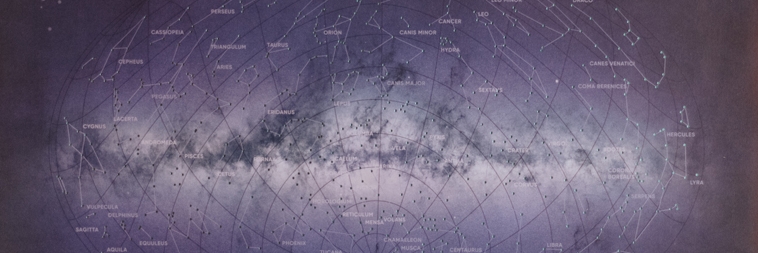
Learn how to read a constellation map and find your named star in the night sky with our beginner’s guide to stargazing, maps and tech tools!
For thousands of years, people have turned to the night sky not just for wonder, but for guidance. But before the days of satellites and smartphones, constellations served as our maps, helping travellers to navigate oceans and deserts. Today, we might not rely on stars to find our way across the globe, but they still provide a cosmic connection that enriches our lives.
Constellation maps are one of the simplest and most rewarding tools for stargazers. They turn the overwhelming canvas of the night sky into something you can understand and explore. And if you’ve named a star with the Online Star Register, a constellation map helps you find your special star and share it with others.
Learning to read a constellation map might seem intimidating at first, but with a little guidance, anyone can master it. The sky becomes far less mysterious when you have the right tools at your fingertips!
What Is a Constellation Map?
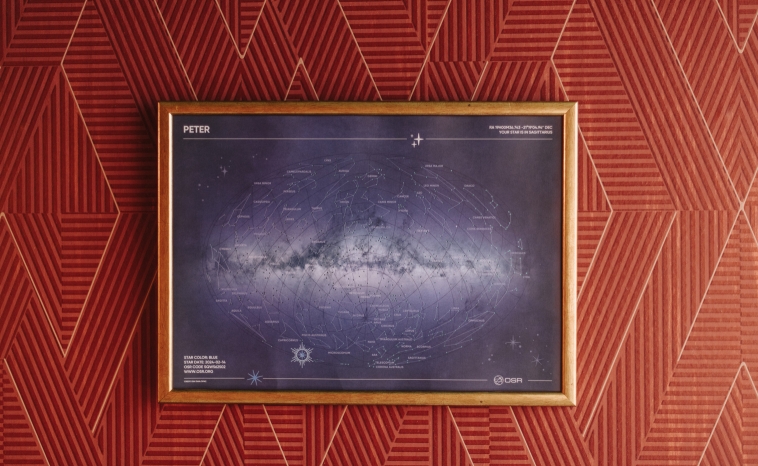
A constellation map, sometimes called a star chart, is a diagram that shows the positions of stars and constellations in the night sky. Think of it as a map of the heavens, designed to help you identify patterns and locate specific stars.
Most maps focus on the brightest stars that are visible to the naked eye, so they are accessible even if you don’t have a telescope. They also highlight constellations, which are groups of stars that form shapes or figures based on cultural myths and stories.
Modern constellation maps can come in many forms: printed charts, revolving star wheels, or digital versions in apps. Each one offers a way to translate the complex night sky into something you can read and use.
Understanding the Basics of a Constellation Map
Before you begin using a constellation map, it’s important to know how they are designed. Here are the key features you’ll encounter:
- Cardinal directions: Maps are often marked with north, south, east, and west. These help you align the chart with the real sky.
- Constellation outlines: The stick-figure shapes connecting stars that form recognisable patterns, like Orion or Ursa Major.
- Magnitude markers: Symbols that show the relative brightness of each star. Larger dots usually represent brighter stars.
- Celestial grid: Some maps include lines of right ascension and declination, the celestial equivalent of longitude and latitude.
- Seasonal focus: Because the night sky changes throughout the year, maps are often created for specific months or seasons.
Once you understand these elements, the chart begins to feel less abstract and more like a usable guide.
How to Use a Constellation Map
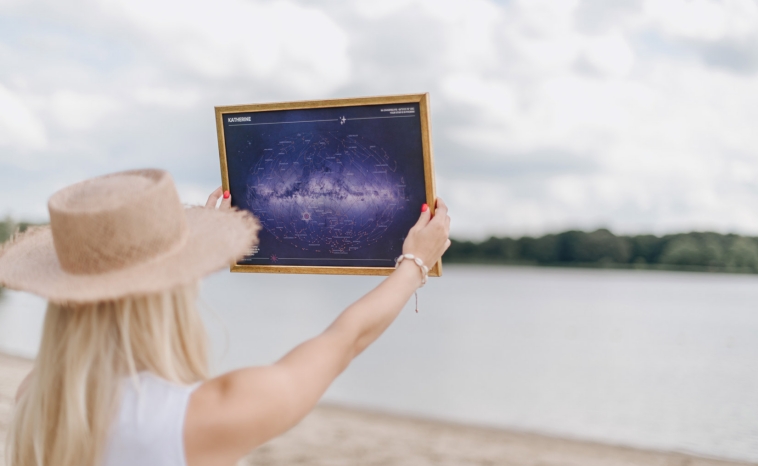
Reading a constellation map is like reading a road map, except the “roads” are the connections between stars. Here’s a step-by-step guide to using one effectively:
- Find your orientation: Start by identifying which direction you’re facing. If your map has north at the top, rotate it so that north aligns with the horizon in front of you.
- Match the patterns: Look for the brightest stars in the sky and try to match them to the patterns on your map. Orion’s Belt, for example, is an easy starting point because of its three distinct stars in a row.
- Work outward: Once you’ve found one constellation, use it as a reference point to find others nearby. This is similar to using landmarks on a road trip.
- Locate your star: If you’ve named a star, use the map to identify its position within a constellation. Your OSR pack or app will highlight where it sits, making it easier to find.
- Double-check with technology: Apps like the OSR Star Finder use augmented reality to overlay constellations directly on the sky through your phone, confirming what you see with your eyes.
With practice, you’ll begin to recognise constellations instinctively, and the map will become second nature.
Seasonal Sky Maps
The night sky isn’t static. As Earth orbits the Sun, different constellations come into view at different times of the year. This means you’ll need to use seasonal maps to keep track.
- Winter: Look for Orion, Taurus, and Gemini.
- Spring: Virgo, Leo, and Boötes dominate.
- Summer: The Summer Triangle of Vega, Deneb, and Altair shines brightly.
- Autumn: Pegasus, Andromeda, and Pisces become easier to spot.
Common Challenges for Beginners

Even with a constellation map, beginners can run into a few hurdles. But don’t worry if you face these issues – it’s all part of the learning process! Here are some of the most common challenges you might run into:
- Light pollution: City lights can make fainter stars hard to see. Try to stargaze in darker areas.
- Sky rotation: The sky appears to move throughout the night as Earth rotates. This means constellations shift position, so your map must be reoriented as time passes.
- Overwhelming patterns: At first, the sheer number of stars can feel confusing. Focus on the brightest ones to get your bearings.
It might seem tricky at first, but these challenges lessen with experience. The more often you use your constellation map, the more intuitive it becomes.
The Role of Technology

While traditional constellation maps are invaluable, technology adds an exciting new dimension. Apps like the OSR Star Finder let you point your phone at the sky and instantly identify stars and constellations. These tools combine age-old stargazing with modern convenience.
The beauty of these apps is their accessibility. Beginners don’t need prior knowledge to start, while experienced stargazers can use them to double-check positions. Combined with your OSR star certificate and constellation map, they make finding your named star an enjoyable experience rather than a challenge!
Why Constellation Maps Inspire Wonder
At their core, constellation maps do more than show us where stars are. They connect us to the stories, science, and beauty of the night sky. Every dot represents a distant sun, and every pattern reflects centuries of human imagination.
Using a constellation map is like participating in a tradition that stretches across cultures and generations. It’s a way of making the vastness of the universe more approachable, one pattern at a time.
By learning how to read a constellation map, you can locate your named star and share it with friends, family, or loved ones. Then, your star becomes more than a gift; it becomes an experience, a story, and a memory that will last for years to come.
So the next time you look up at the night sky, bring your constellation map along. Somewhere out there is your star, waiting to be found!