Why Do We Use Star Names?
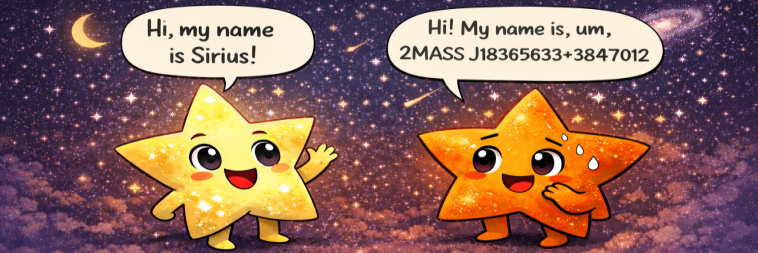
Ever wondered why we use star names? Explore the history of star naming, from ancient myths to modern astronomy, and why humans still name stars today.
For as long as humans have looked up at the night sky, we’ve felt the urge to make some sense of it. Long before telescopes, satellites, and star charts, people noticed that the stars followed patterns. They rose and set at predictable times, shifted with the seasons, and formed shapes that seemed familiar, even meaningful.
Over time, those patterns were given names. Individual stars were identified. Entire regions of the sky were mapped and labelled. Some of those names are still used today, while others have faded into history.
But stars don’t need names. After all, they exist independently of human language or culture. So why do we name stars at all? What purpose does it serve, and why does the idea of naming stars still fascinate so many of us today?
To answer that, we need to look at how star naming began, how it evolved alongside astronomy, and why it remains such a powerful concept today.
How Early Humans Used the Stars

Before artificial lighting, the night sky was far brighter and more familiar than it is for most people now. Stars played an important role in daily life, especially for early societies that depended on the natural world for survival.
The movement of stars helped people track time. Certain stars appeared at the same points each year, marking seasonal changes that were crucial for farming, hunting, and migration. Over generations, this knowledge became refined and reliable.
To pass this information on, people needed shared reference points. Naming stars and star patterns made that possible. It allowed communities to teach navigation, calendars, and rituals using a common celestial language.
At this stage, star naming was practical as much as it was symbolic!
Constellations: The First Star Naming Systems
Rather than naming individual stars, early observers tended to group stars together. These groupings became what we now call constellations.
Constellations helped organise the sky into manageable sections. Instead of trying to remember thousands of individual points of light, people could remember stories and shapes.
Crucially, constellations were not universal. Different cultures grouped the same stars in different ways. A pattern recognised as a hunter in ancient Greece might represent an animal, a tool, or a spiritual figure elsewhere in the world.
This tells us something important about star naming. It’s not dictated by the stars themselves, but by how we, as humans, interpret them. The names reflect culture, environment, and belief systems rather than objective features of space.
Mythology and Meaning in Star Names

In many ancient civilisations, star names were deeply connected to mythology. The night sky became a place where stories were written and preserved.
Ancient Greek astronomy is one of the most influential examples. Many of the constellation names that we still recognise today come from Greek myths, including Orion, Andromeda, Perseus, and Cassiopeia. These stories helped explain the world, reinforce cultural values, and make the sky easier to remember.
Other cultures developed their own systems too. Ancient Egyptians linked stars to religious beliefs and the afterlife. Chinese astronomy divided the sky into regions associated with power, order, and the seasons. Indigenous cultures across the globe created star stories tied directly to land, animals, and survival.
In every case, naming stars helped people integrate the sky into everyday life.
Stars as Tools for Navigation and Travel
Beyond storytelling, stars served a vital practical purpose: navigation.
Long before modern instruments, travellers and sailors relied on the night sky to find their way. Certain stars became especially important because of their reliability and position.
The North Star, Polaris, is the most famous example. Because it sits close to the north celestial pole, it appears almost stationary in the sky. For centuries, it’s been used to determine direction in the Northern Hemisphere.
To teach navigation effectively, specific stars needed consistent names. This allowed knowledge to be shared accurately across generations and regions. In this context, star names were essential tools, not just poetic labels.
The Influence of Arabic Astronomy on Star Names
Many of the star names still used today have Arabic origins. This is largely due to the work of Islamic scholars during the medieval period.
Between the 8th and 14th centuries, astronomers in the Islamic world preserved and expanded upon earlier Greek knowledge. They produced detailed star catalogues, recorded precise observations, and developed mathematical techniques that later influenced European science.
As a result, many bright stars carry Arabic-derived names. Examples include Aldebaran, Altair, Vega, and Betelgeuse. These names were adopted by European astronomers rather than replaced, which is why they remain in use today.
Modern star naming is therefore the result of centuries of shared astronomical knowledge across cultures.
Why Modern Astronomy Moved Away From Traditional Star Names
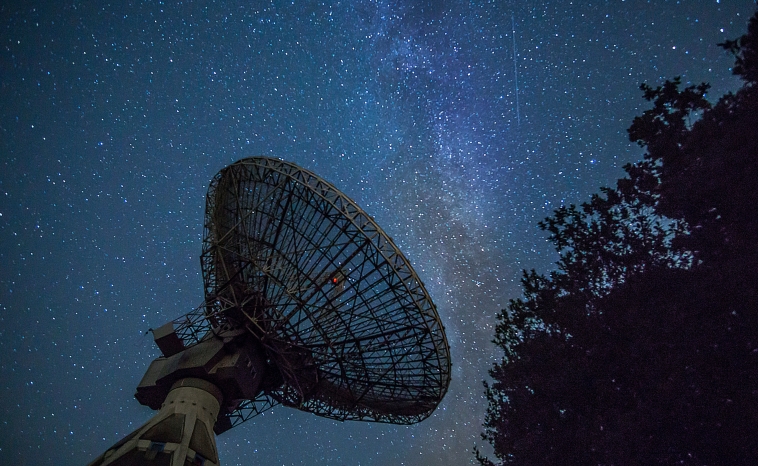
As telescopes improved, astronomers discovered that the universe contained FAR more stars than we’d previously imagined! The naked eye can only see a few thousand stars under ideal conditions, but telescopes revealed millions, then billions.
As you might imagine, at this scale, traditional naming became completely impractical!
Astronomy needed systems that could handle vast numbers of objects without confusion. This led to the development of catalogue-based naming systems, where stars are identified using letters, numbers, and coordinates.
One early example is the Bayer designation system, which labels stars by brightness within a constellation. Later catalogues expanded this approach even further.
These systems prioritise accuracy and clarity, but they lack the familiarity of traditional star names.
Who Decides on Star Names Today?
Today, the International Astronomical Union (IAU) is responsible for standardising the names of celestial objects. It ensures that astronomers around the world use consistent terminology.
Only a limited number of stars have officially recognised proper names. Most stars are identified solely through catalogue numbers.
This approach is essential for scientific research. However, it does not address the cultural or emotional side of star naming, which continues to interest the general public.
Why People Still Want to Name Stars
Despite modern astronomy’s reliance on catalogues, the idea of naming stars remains popular. This is because naming is a deeply human behaviour.
Names help people form connections. They mark significance, memory, and meaning. Stars, which represent vast distances and timescales, naturally inspire reflection and curiosity.
For many people, naming a star is symbolic rather than scientific. It’s a way to create a personal link to the universe, rather than an attempt to change astronomy.
This is why star names continue to appear in art, literature, and popular culture.
Explore the Night Sky for Yourself

The night sky has been named, mapped, and studied for thousands of years, yet it still inspires curiosity today. With nothing more than a clear evening, you can spot many of the same stars that guided ancient travellers and storytellers.
Tools like star maps and constellation guides can help you identify key stars and learn their histories. And for those who want to mark a personal connection to the cosmos, naming a star remains a meaningful way to celebrate curiosity and wonder.
The stars may be distant, but our relationship with them has always been surprisingly close. And with the right tools, it becomes much easier to identify those stars and understand what you’re looking at. The OSR Star Finder App and personalised star maps allow you to explore the night sky from your own location, helping you spot constellations, learn star names, and connect what you see above you with centuries of astronomical history.
If you’d like to take that connection a step further, naming a star through OSR is a meaningful way to mark a personal moment in the vastness of space. Whether it’s to celebrate a birthday, commemorate a milestone, or simply honour a shared curiosity about the universe, an OSR star naming package offers a unique and lasting reminder of that connection.