How Many Stars Are There in the Universe?
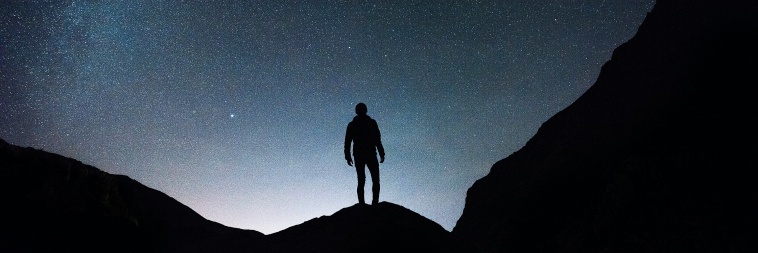
How many stars are there in the universe? Discover the latest estimates, why counting stars is so difficult, and what astronomers really know.
On a clear night, away from city lights, the sky can feel almost overwhelming. Thousands of stars are visible to the naked eye, scattered across the darkness in every direction. It’s natural to wonder just how many stars are really out there.
It’s a simple enough question – but one with a surprisingly complicated answer!
Astronomers have spent decades trying to estimate the total number of stars in the universe, and while they’ve made impressive progress, there’s still no exact figure. Instead, scientists work with estimates, ranges, and educated assumptions based on what we can observe.
So how many stars are there in the universe? And why is it so difficult to put a final number on something that feels so fundamental? Let’s investigate!
- How Many Stars Can We See From Earth?
- How Many Stars Are There in the Milky Way?
- How Many Galaxies Are There in the Universe?
- Estimating the Total Number of Stars in the Universe
- Why Can’t We Just Count Them All?
- Will We Ever Know the Exact Number of Stars in the Universe?
- Explore the Universe From Your Own Location
How Many Stars Can We See From Earth?
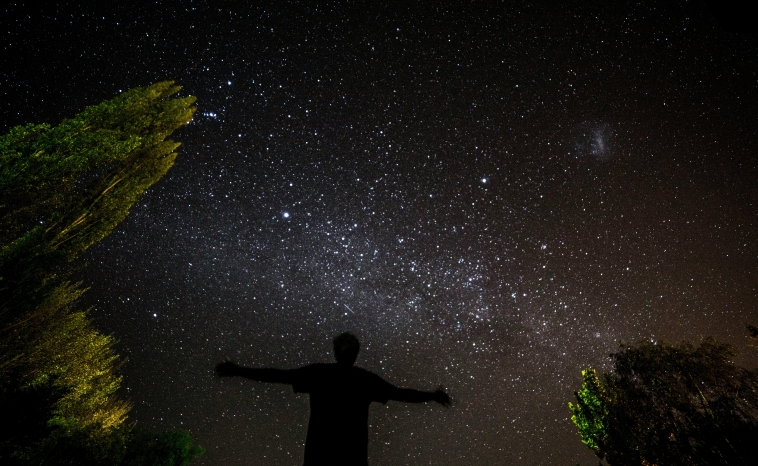
Let’s start close to home.
Under perfect conditions, the human eye can see around 6,000 stars across the entire sky. From any one location at a given time, roughly half of those are visible, meaning about 3,000 stars at most.
This might sound like a lot, but it’s only a tiny fraction of what exists even within our own galaxy.
Light pollution reduces this number dramatically. In towns and cities, many people can see only a few dozen stars, or sometimes just the brightest planets and constellations.
What we see with our eyes is not representative of the true scale of the universe. To understand that scale, we need telescopes.
How Many Stars Are There in the Milky Way?
The Milky Way is the galaxy we live in. It’s a vast, spiral-shaped system containing stars, planets, gas, dust, and dark matter.
Astronomers estimate that the Milky Way contains somewhere between 100 billion and 400 billion stars.
That range alone highlights the difficulty of counting stars. Even in our own galaxy, we can’t see every star clearly. Dust clouds obscure large regions, especially near the galactic centre, and many stars are too faint or distant to detect directly.
Instead of counting individual stars, scientists estimate the total by measuring the galaxy’s mass, brightness, and structure, then applying models of stellar formation and distribution.
How Many Galaxies Are There in the Universe?
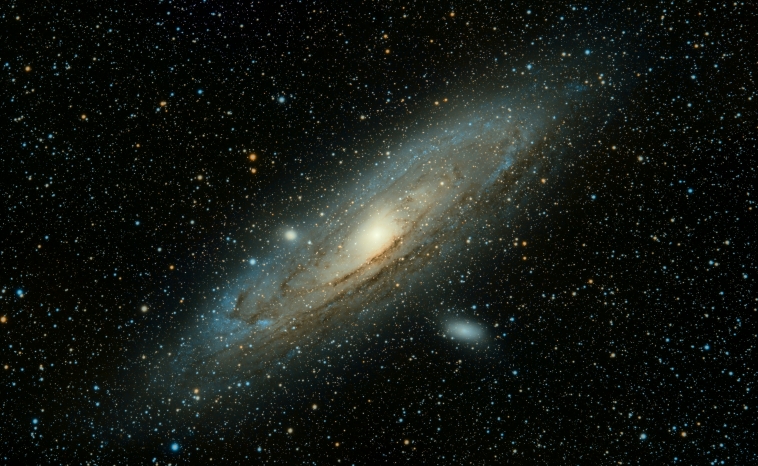
Once we move beyond the Milky Way, the numbers increase dramatically!
For many years, astronomers believed there were around 100 billion galaxies in the observable universe. However, data from deep-space surveys, particularly those conducted using the Hubble Space Telescope, suggested that this figure was far too low.
More recent studies estimate that the observable universe contains around two trillion galaxies. And that’s just the bit we can see – who knows how much universe is beyond the boundaries of what we can observe!)
Many of these galaxies are extremely faint or distant, making them difficult to detect. Some are so small or diffuse that they blend into the background of space.
Remember, each of those galaxies contains millions, billions, or even trillions of stars of its own!
Estimating the Total Number of Stars in the Universe
To estimate the total number of stars, astronomers combine two large numbers: the estimated number of galaxies and the average number of stars per galaxy.
Using conservative estimates, this leads to a figure of around 200 sextillion stars in the observable universe. That’s a 2 followed by 23 zeros.
In numerical terms, that’s almost impossible to visualise.
Another way to think about it is that there may be more stars in the universe than grains of sand on all the beaches on Earth. This comparison isn’t exact, but it helps convey the sheer scale involved.
It’s important to note that this number applies only to the observable universe. There’s almost certainly far more stars beyond what we can see.
What Do Astronomers Mean by the “Observable Universe”?
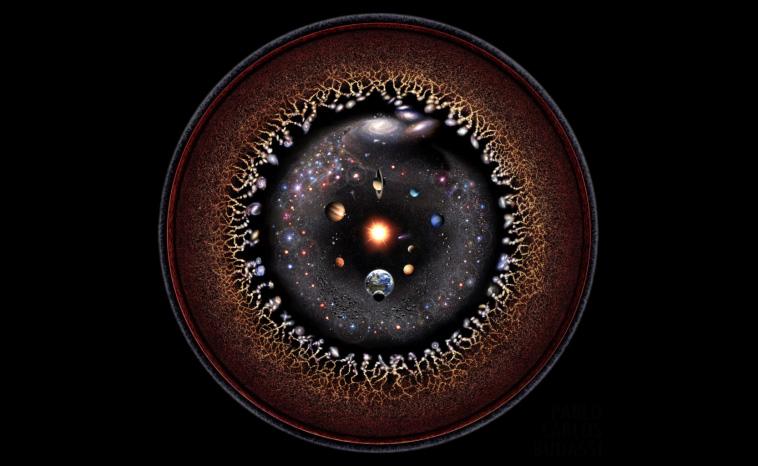
Pablo Carlos Budassi, CC BY-SA 4.0, via Wikimedia Commons
Pablo Carlos Budassi, CC BY-SA 4.0, via Wikimedia Commons
When scientists talk about the observable universe, they’re not describing the entire universe. They’re describing the portion of it that we can observe from Earth.
The universe is around 13.8 billion years old. Light travels at a finite speed, so we can only see objects whose light has had time to reach us.
Anything beyond that limit exists beyond our observational horizon. It may contain stars and galaxies, but their light hasn’t reached Earth yet. And according to our current understanding of how fast the universe is expanding, that light might never reach us.
This means that any estimate of the total number of stars is inherently incomplete. Essentially, we’re working with a cosmic snapshot, not the full picture.
Why Can’t We Just Count Them All?
If we can estimate so much, why can’t we simply count every star?
Well, there are several major challenges.
First, distance. Many stars are incredibly faint and far away. Even with powerful telescopes, distinguishing individual stars in distant galaxies is often impossible.
Second, dust and gas. Interstellar material can block or scatter light, hiding stars from view. This is particularly common in star-forming regions.
Third, resolution limits. At great distances, entire galaxies may appear as single points of light, rather than collections of individual stars.
Finally, the universe is dynamic. Stars are constantly forming and dying. By the time we’d gotten around to counting them all, our figure would be outdated almost immediately!
Will We Ever Know the Exact Number of Stars in the Universe?
In short: it’s unlikely that we will ever know the exact number of stars in the universe.
As technology improves, our estimates will become more refined. New telescopes, such as the James Webb Space Telescope, allow astronomers to see deeper into space and further back in time than ever before.
But fundamental limits still remain. The speed of light, the expansion of the universe, and the presence of unseen matter mean that some regions will always remain beyond our reach.
In astronomy, precision often gives way to scale. Understanding the order of magnitude is more important than knowing the exact figure.
Why the Question Still Matters
Even if we can’t count every star, asking the question is still valuable.
It helps scientists test models of galaxy formation and cosmic evolution. It pushes the limits of observation and technology. And it reminds us of the vastness of the universe we inhabit.
For many people, the sheer number of stars inspires curiosity, humility, and wonder. It puts everyday concerns into a broader perspective.
Explore the Universe From Your Own Location
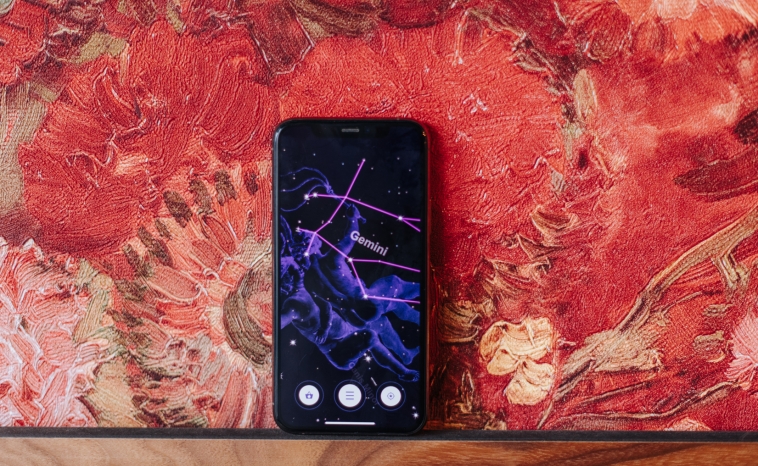
You don’t need to grasp astronomical numbers to enjoy the night sky. With just your eyes, you’re already seeing objects that are light-years away.
Tools like the OSR Star Finder App and personalised star maps make it easier to identify stars and constellations from your exact location, helping you understand what you’re looking at and where it sits in the wider universe.
If you’d like to create a personal connection to that vastness, naming a star through OSR is a meaningful way to mark a moment, a person, or a shared sense of curiosity. Whether you choose the Online Star Gift, the OSR Gift Pack, or the Super Star Gift, each option offers a unique way to engage with the night sky and make the universe feel just a little closer.