Are the Stars We See Already Dead?
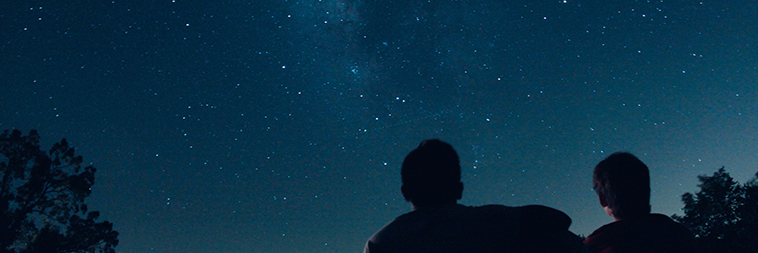
Are the stars we see already dead? Learn how long starlight takes to reach Earth – and what it means for astronomy.
Look up at the night sky on a clear evening, and you’re greeted by something that feels immediate and timeless: thousands of stars, glittering overhead in real time. But astronomy often has a habit of pulling the rug out from under our intuitions! The reality is, the light entering your eyes tonight probably left its source hundreds, thousands, or maybe even millions of years ago.
This raises a wonderfully unsettling question: are the stars we see already dead?
The short answer is, in some cases, yes – but the longer answer is far more interesting.
To understand why, we need to talk about light, distance, stellar lifecycles, and just what “death” actually means when you’re dealing with objects that stick around for billions of years.
How Does Starlight Travel?

Quick as it might be, light doesn’t travel instantaneously. Even at its extraordinary speed – about 300,000 kilometres per second – it still takes time to cross the vast distances of space.
Astronomers measure these distances using light-years, which describe how far light travels in one year. That means:
- The Sun is about 8 minutes away in light-travel time
- The nearest star system, Alpha Centauri, is about 4.3 light-years away
- Many stars visible to the naked eye are hundreds or thousands of light-years distant
But how does that affect the night sky we see? Well, when you observe a star 1,000 light-years away, you’re actually seeing it exactly as it was 1,000 years ago. In a very real sense, the night sky is a time machine – one that lets us peer deep into the cosmic past without ever leaving Earth.
What Does it Mean for a Star to “Die”?
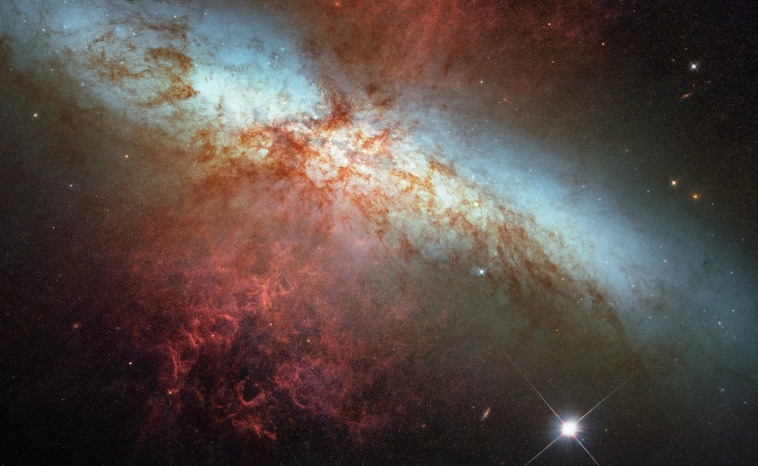
CREDIT: NASA, ESA, A. Goobar (Stockholm University), and the Hubble Heritage Team (STScI/AURA)
CREDIT: NASA, ESA, A. Goobar (Stockholm University), and the Hubble Heritage Team (STScI/AURA)Before deciding whether a star is already dead, we need to define what stellar death actually looks like. After all, stars don’t die suddenly like living organisms. Instead, they evolve over incredibly long timescales, changing form as they exhaust their fuel. And a star’s ultimate fate depends largely on its mass.
Low-and Medium-Mass Stars (Like Our Sun)
Stars similar to the Sun spend billions of years quietly fusing hydrogen into helium. When that fuel runs low, they expand into red giants, shed their outer layers, and leave behind a dense core known as a white dwarf.
This process is slow, graceful, and relatively gentle – at least by cosmic standards!
Massive Stars
Very large stars live fast and die spectacularly. After burning through their fuel, they can collapse and explode as supernovae, briefly outshining entire galaxies. What remains may be a neutron star or a black hole.
These violent deaths are among the most energetic events in the universe – and crucially, they can occur long before their final light reaches Earth.
So… Are We Looking at Stellar Ghosts?
In some cases, yes.
If a massive star exploded as a supernova 5,000 years ago, but it’s 6,000 light-years away, observers on Earth wouldn’t see the explosion for another 1,000 years. Until then, we’d continue to see the star exactly as it appeared before its death.
There are even known examples where astronomers have identified supernova remnants – expanding clouds of debris – but historical records show that no explosion was seen at the time. That’s because the light simply hadn’t arrived yet.
However, it’s worth adding a little nuance here.
Most Naked-Eye Stars are Probably Still Alive
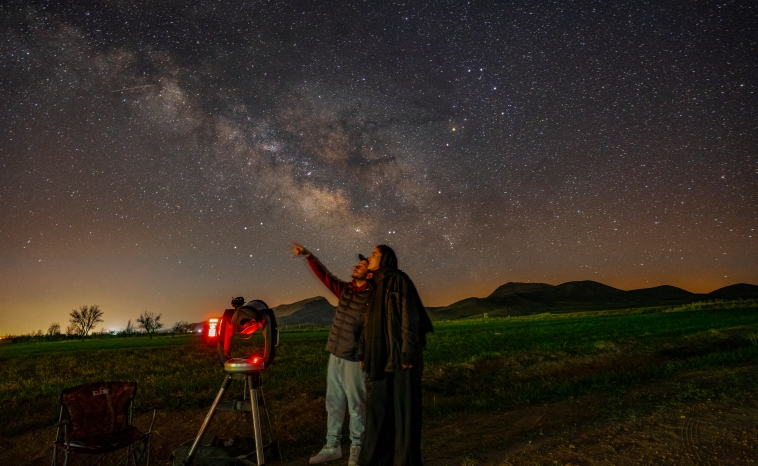
While the idea of a sky full of stellar ghosts is compelling, the reality is a bit calmer.
Most stars visible without a telescope are:
- Relatively close by (within a few thousand light-years)
- Long-lived, especially smaller stars
- Stable and unlikely to have changed dramatically in human history
Stars like Betelgeuse, for example, often spark exciting headlines about its impending supernovae. And while it will explode someday, astronomers are pretty confident it’s unlikely to happen imminently – at least on a human timescale.
So, while some stars we see may technically no longer exist in their original form, the majority are probably still burning away much as they were when their light began its journey.
The Night Sky as a Layered Timeline
One of the most mind-bending aspects of astronomy is that the night sky doesn’t represent a single moment in time. Instead, it’s a layered collage of different eras:
- Nearby stars show us the recent past
- Distant stars reveal ancient galactic history
- Entire galaxies appear as they were millions or billions of years ago
When you look up, you’re not just seeing “now” – you’re seeing a patchwork of cosmic moments stitched together by the finite speed of light. This is why astronomers sometimes say that there is no such thing as a truly real-time view of the universe.
Can We Tell if a Star is Already Gone?
In most cases, we can’t – at least not directly anyway.
Astronomers rely on:
- Stellar mass estimates
- Spectral analysis
- Models of stellar evolution
to predict a star’s future, but they can’t tell us with certainty whether a distant star has already ended its life unless we’ve observed the aftermath.
Sometimes, though, we get lucky. If we detect a sudden burst of neutrinos or gravitational waves, these signals can reach Earth before visible light, giving astronomers an early warning that a supernova has occurred – even though we won’t see it just yet.
A Sky Full of Stories

So, are the stars we see already dead?
For some of them, almost certainly. But others are still shining, unaware that they’re being observed by a curious species on a small planet orbiting a modest star! What unites them all is that they’re messengers from the past, telling stories written in nuclear fire and carried across space at the speed of light.
The next time you look up, remember that you’re not just seeing points of light – you’re seeing history itself, arriving one photon at a time.
If a particular star or constellation has personal significance to you, why not turn that fleeting connection into something lasting? With OSR’s star naming gifts, you can dedicate a star to a moment, person, or memory that matters – anchoring your own story within the vast timeline of the universe.
Because even in a sky full of ancient light, some moments deserve to shine just a little brighter!