What 3I/ATLAS Teaches Us About Visitors From Beyond Our Solar System
 CREDIT: ESA/Hubble, CC BY 4.0, via Wikimedia Commons

What is 3I/ATLAS? Explore what this interstellar visitor reveals about objects beyond our Solar System and how astronomers study them.
Every so often, something simply extraordinary sweeps through our cosmic neighbourhood – not a star, not a planet, but a frozen traveller from the deep unknown. The recent excitement around 3I/ATLAS, only the third confirmed interstellar object to enter our Solar System, has once again reminded astronomers and stargazers alike that our corner of the galaxy is far from quiet. These rare visitors offer us a glimpse into worlds far beyond our Sun, carrying clues about how stars form, how planets grow, and what the wider universe is made of.
But what exactly is 3I/ATLAS? And why has it captured so much attention? Let’s take a journey into interstellar space and meet this unusual cosmic guest.
What Is 3I/ATLAS, and Why Is It So Exciting?
CREDIT: ESA/Hubble, CC BY 4.0, via Wikimedia Commons
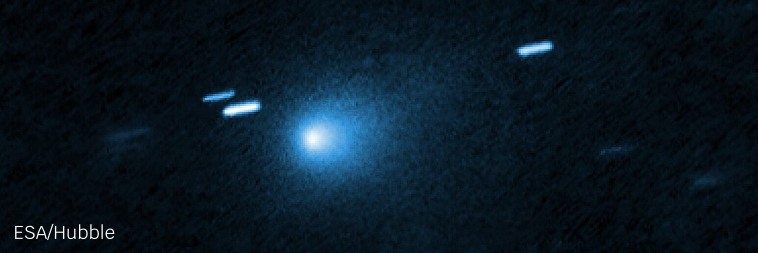
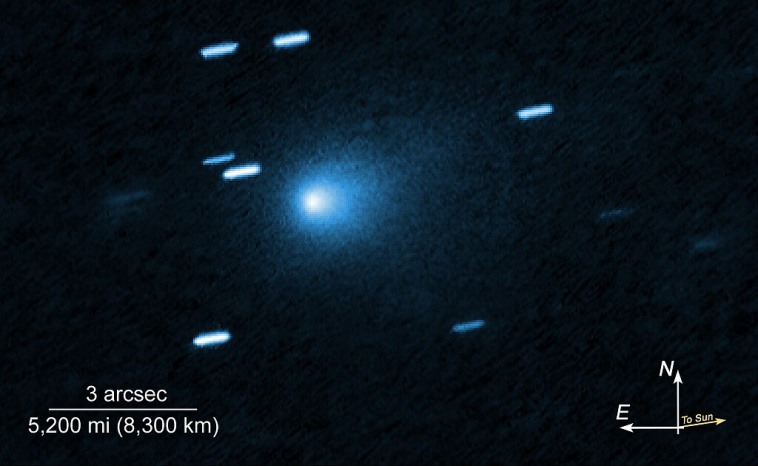
CREDIT: ESA/Hubble, CC BY 4.0, via Wikimedia Commons3I/ATLAS was first spotted by the ATLAS survey – a sky-scanning system designed to detect near-Earth objects – and it immediately stood out. Unlike ordinary comets, which loop around the Sun along long but predictable paths, this object is on a hyperbolic trajectory. In plain English: it’s not coming back. Ever.
The “3I” in its name marks it as the third confirmed interstellar object we’ve found, following 1I/ʻOumuamua in 2017 and 2I/Borisov in 2019. While comets are common, interstellar comets are not. These objects have travelled for unimaginable distances, perhaps for millions of years, before briefly drifting through our skies.
For astronomers, that makes 3I/ATLAS a rare opportunity. It isn’t just another icy body – it’s a messenger from another star system, formed around a completely different Sun.
How Interstellar Comets Travel Through the Galaxy

Most comets in our skies were born with our Solar System, circling the Sun like distant, slightly eccentric relatives. Interstellar comets, however, are wanderers. They’re thought to be knocked out of their original star systems – perhaps by gravitational tugs from giant planets – and sent drifting through the Milky Way.
Unlike local comets, they don’t orbit anything. They simply pass through, carrying with them frozen material untouched since the beginning of their own system. Studying them helps astronomers compare our local cosmic recipe to those of distant stars. Are other systems made of the same stuff? Are there elements or molecules we rarely see? Every interstellar encounter brings new clues.
3I/ATLAS vs ʻOumuamua vs 2I/Borisov
With three interstellar visitors now observed, we finally have a little comparison to work with. Each one has been different enough to keep scientists guessing.
ʻOumuamua arrived first – a mysterious, elongated object with behaviour so unusual it sparked headlines and wild speculation. Was it a comet that had lost all its gas? An unusually shaped asteroid? Something else entirely? We still don’t have all the answers.
2I/Borisov was far more traditional: a classic comet, complete with a dusty tail and familiar composition. It looked and behaved much like comets formed around our own Sun.
3I/ATLAS appears to sit somewhere in the middle: a fairly traditional-looking comet, but with interstellar origins and a few quirky touches, things like an unusually high ratio of carbon dioxide to water vapour and much more nickel than iron (where most comets tend to have similar amounts). Studying it may help scientists fill in the gaps between the two earlier visitors and better understand what typical “foreign” comets look like.
Why We’re Fascinated by Visitors From Other Star Systems
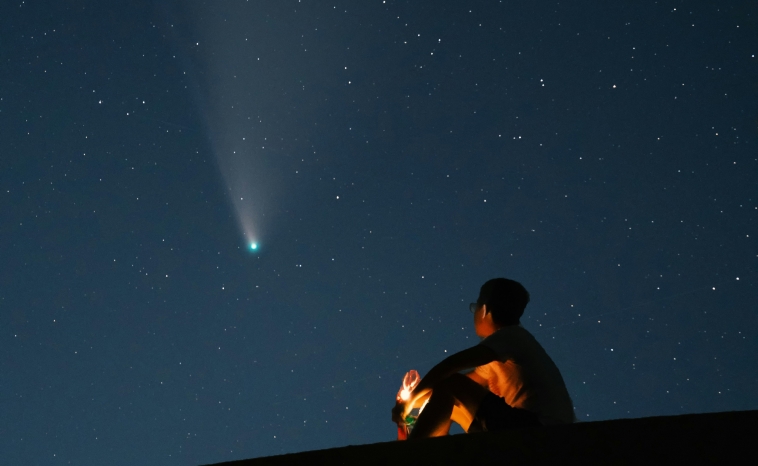
Part of the appeal is scientific, of course – these objects are natural probes, bringing material from faraway suns into our telescopes. But there’s something romantic about them too. Interstellar comets feel like cosmic wanderers, passing through our sky on their way to nowhere in particular. They remind us that the universe is connected. That atoms from a distant, unknown system can drift close enough for us to spot, study, and appreciate.
And because they’re so rare, each one feels like a super special event. A reminder that our Solar System isn’t isolated. It’s part of a much wider, busier galaxy!
How You Can Explore the Night Sky Too
You might not be able to catch a glimpse of 3I/ATLAS yourself, but that doesn’t mean you can’t explore the wonders above you. Comets, meteor showers, bright planets, and star clusters can be seen with nothing more than your eyes or a simple pair of binoculars.
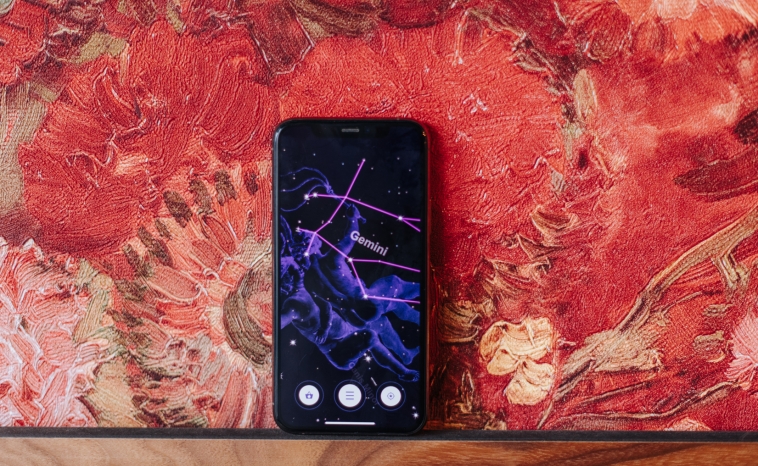
Online Star Register offers tools like the OSR Star Finder App and detailed star maps to help you navigate the night sky from home. And if you’d like to give someone their own personal connection to the cosmos, you can even name a star, choosing from OSR’s range of gift options – a unique way to spark a lifelong interest in the universe.
Interstellar comets may be rare, but curiosity about the cosmos is universal. The next great discovery could be just around the corner – or already streaking silently through the dark, waiting to be noticed!