Why the Night Sky Isn’t Black

Ever wondered why the night sky isn’t black? Learn about zodiacal light, light pollution, and what the glowing universe reveals about space!
Think about the vastness of space. Imagine the sprawling emptiness, punctuated by the occasional star, or comet, or maybe even a nebula.The space you’re imagining is probably pretty dark, right? So why, from our vantage point here on Earth, is that so often not the case? Why isn’t the night sky black in the dark of night?
On a clear night, far from city lights, the sky doesn’t appear pitch black. Instead, it often glows softly – sometimes milky, sometimes pale green, or gently golden near the horizon. To the casual observer, this subtle illumination might seem like an illusion or even a trick of the eye. Yet it’s entirely real – and each source of faint light carries information about the universe and our own planet. So, what’s going on? Let’s take a closer look!
What Is Airglow?
One of the most important contributors to the natural brightness of the night sky is airglow. High in the atmosphere, ultraviolet sunlight excites atoms and molecules during the day. At night, these excited particles release their energy as light, creating a faint but widespread glow.
Airglow is subtle, often invisible in urban areas due to light pollution. But in a truly dark location, it can make the sky shimmer with faint colours, from pale green to reddish-orange, particularly near the horizon. The effect is constant, a reminder that even our own planet is contributing to the night’s luminosity.
Zodiacal Light and Interplanetary Dust
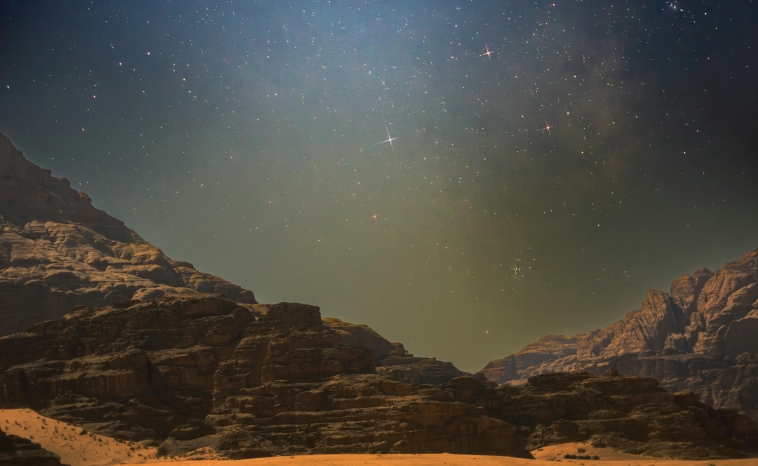
Another contributor is zodiacal light, a faint cone of light that appears along the ecliptic – the plane of the solar system – just after sunset or before sunrise. Zodiacal light is caused by sunlight reflecting off tiny dust particles left over from the formation of planets and comets.
While subtle, zodiacal light is a visible trace of our solar system’s early history. The soft glow we see is composed of debris millions of kilometres away, bridging the gap between planetary formation and our current observations. It’s another example of how faint light can tell us rich stories about cosmic events.
Light Pollution Vs Natural Glow

Artificial light, however, complicates our observations. Streetlights, car headlights, and urban development scatter light into the atmosphere, creating skyglow that overwhelms the subtle natural illuminations. This is why the night sky in cities often appears nearly monochrome or washed out.
Escaping light pollution is not just a matter of aesthetic enjoyment. In truly dark skies, the interplay between airglow, zodiacal light, and starlight becomes visible. It’s then that the sky reveals its layered complexity – something astronomers and serious stargazers treasure.
How Astronomers Use Faint Light
Far from being a nuisance, faint background light carries valuable information. Variations in airglow can indicate changes in Earth’s upper atmosphere, solar activity, or even cosmic phenomena. Astronomers analyse these faint signals to understand everything from atmospheric chemistry to the behaviour of distant stars and galaxies.
For example, patterns in airglow can provide clues about solar wind interactions with Earth’s magnetosphere, while zodiacal light helps scientists study the distribution of interplanetary dust and the dynamics of the solar system. The night sky’s glow isn’t background noise – it’s a literal data source.
The Milky Way and Distant Light
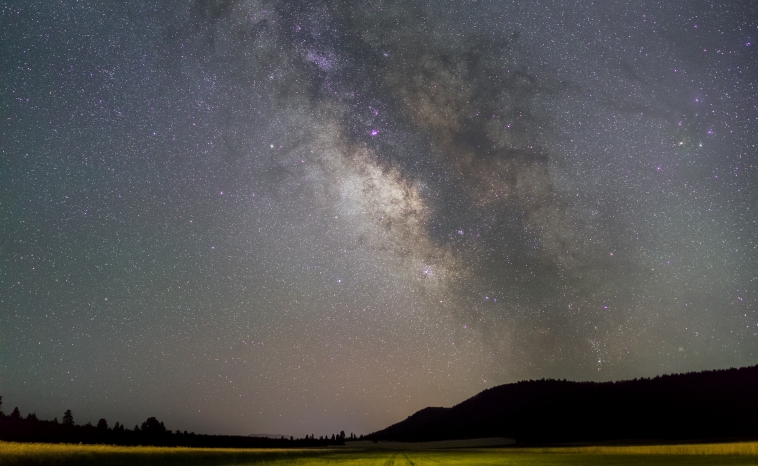
Even the light from stars and galaxies far beyond our solar system contributes to the sky’s faint luminosity. The Milky Way appears as a soft, diffuse band across the sky because billions of unresolved stars emit light that our eyes perceive collectively. Beyond our galaxy, faint starlight from other galaxies only adds to the cosmic background, creating a subtle glow visible with sensitive instruments.
This faint illumination reminds us that the universe is not empty; it is teeming with energy, activity, and history. Every photon reaching our eyes has traversed vast distances, carrying information across time and space.
Mark Your Place In The Glow

The night sky’s faint glow is more than decoration – it’s a fascinating story. From airglow and zodiacal light to the combined radiance of distant stars and galaxies, every photon carries information about our planet, our solar system, and the cosmos beyond. Understanding these subtleties deepens our appreciation for the universe and highlights just how much is happening above our heads every night.
If you’d like to make your own mark on this luminous canvas, the Online Star Register lets you name your own star and anchor a personal story within this ever-changing glow. It’s a way to connect your life to the cosmos, creating a lasting reminder that even the faintest light can hold profound meaning.