What Are Solar Storms?
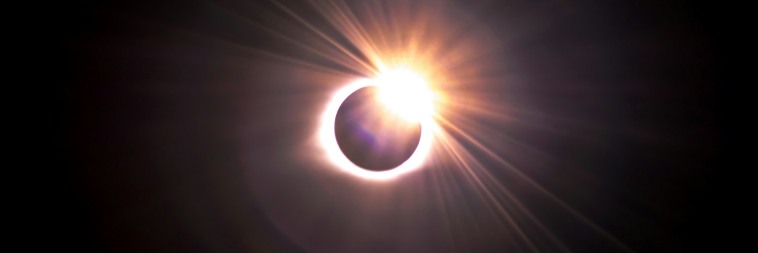
Discover what solar storms are, how they form, and their impact on Earth’s technology and daily life. Learn about solar flares, coronal mass ejections, and how scientists track them.
From 150 million kilometres away, the Sun looks like a glowing, steady beacon of light. But behind that calm appearance lies a turbulent giant. The Sun is a constantly shifting sphere of plasma, fuelled by nuclear fusion, and subject to enormous magnetic forces. Occasionally, this activity boils over in dramatic events known as solar storms, bursts of charged particles and radiation that surge into space.
Solar storms may sound like the stuff of science fiction, but they’re very real, and their effects can be felt right here on Earth. From disrupting satellites and power grids to creating spectacular auroras, these cosmic tempests are a constant reminder of our planet’s connection to its parent star.
In this article, we’ll take a journey into the science of solar storms, exploring what they are, how they form, their different types, their impact on Earth, and how scientists are working to predict and prepare for them.
What Is a Solar Storm?
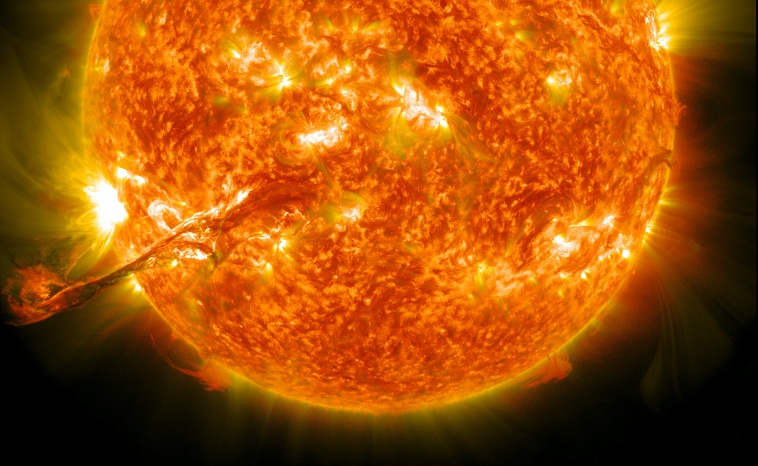
A solar storm is a broad term that we use to describe the disturbances on the Sun that release enormous amounts of energy into space. These disturbances often involve bursts of electromagnetic radiation, charged particles, and plasma, all linked to the Sun’s powerful and tangled magnetic fields.
At their core, solar storms are caused by the Sun’s magnetic activity. The Sun rotates unevenly, with its equator spinning faster than its poles, causing its magnetic field lines to twist and sometimes snap. When they do, vast amounts of energy are unleashed.
Solar storms can take several forms, but the three most common are:
- Solar flares: Sudden, intense flashes of radiation from the Sun’s surface.
- Coronal mass ejections (CMEs): Huge bubbles of plasma and magnetic fields ejected into space.
- Solar energetic particles (SEPs): High-energy particles accelerated by solar flares or CMEs.
Each type has its own characteristics and effects, but together they shape what we call space weather.
What Are Solar Flares?
Imagine a flare shooting up from the Sun’s surface, brighter than billions of nuclear bombs detonating at once. That’s a solar flare. These powerful bursts release energy across the electromagnetic spectrum, from radio waves to X-rays.
Astronomers classify solar flares into different categories, depending on their strength: A, B, C, M, and X. An X-class flare, the most powerful, can unleash energy equivalent to a billion hydrogen bombs.
On Earth, solar flares can disrupt radio communications, interfere with navigation systems, and even endanger astronauts in space. The flares themselves don’t usually cause auroras, but their radiation can ionise our atmosphere and cause radio blackouts.
What Are Coronal Mass Ejections?
If solar flares are sparks, coronal mass ejections (CMEs) are fireballs. A CME occurs when the Sun hurls billions of tonnes of plasma and magnetic fields into space. These clouds can travel at millions of kilometres per hour, and if they collide with Earth, the results can be dramatic.
When a CME hits Earth’s magnetic field, it can trigger geomagnetic storms. These storms cause dazzling auroras, but they can also induce electrical currents in power grids, disrupt GPS, and damage satellites. The intensity of the geomagnetic storm depends on the size and speed of the CME and the orientation of its magnetic field.
The most famous CME event (so far!) was the Carrington Event of 1859, when telegraph systems across the world sparked, shocked operators, and caught fire. If such a storm happened today, the consequences for our electricity-based civilisation could be nothing short of catastrophic.
What Are Solar Energetic Particles?
Solar energetic particles (SEPs) are high-speed protons and electrons accelerated by solar flares or shock waves from CMEs. They race through space at nearly the speed of light and can reach Earth in under an hour.
For astronauts, SEPs are particularly dangerous, because they can penetrate spacecraft shielding and damage human DNA. On Earth, our magnetic field shields us from most SEPs, but they can still interfere with satellites, aircraft communications, and polar flights.
The Solar Cycle: Why Storms Come in Waves
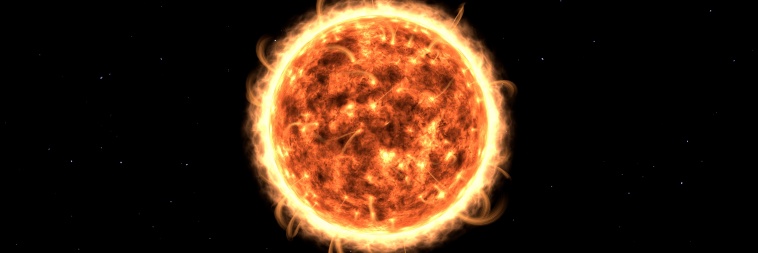
Solar storms don’t just happen randomly – they follow an 11-year solar cycle. During solar maximum, the Sun’s magnetic activity peaks, producing more sunspots, flares, and CMEs. During solar minimum, the Sun is relatively calm.
We’re currently in Solar Cycle 25, which began in 2019 and is expected to peak around 2025 – 2026. Accordingly, scientists are currently observing increased solar activity, including strong CMEs and X-class flares.
Understanding the solar cycle helps researchers forecast when Earth might experience more frequent storms, though predicting individual events still remains a challenge.
How Do Solar Storms Affect Earth?

While solar storms are fascinating, they can also be disruptive. Their impact on Earth can be grouped into several categories:
Power Grids
Geomagnetic storms induce electric currents in long conductors, like power lines. This can overload transformers and cause blackouts. In 1989, a solar storm caused a nine-hour power outage in Quebec, leaving millions in the dark.
Satellites and Spacecraft
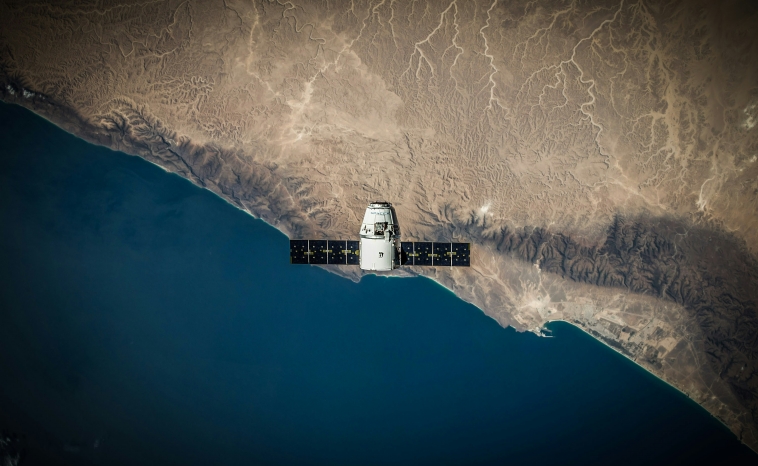
Solar storms can fry satellite electronics, degrade solar panels, and throw spacecraft off course by interfering with their navigation systems. In February 2022, SpaceX lost 40 newly launched satellites after a geomagnetic storm increased atmospheric drag, causing them to burn up.
Communications
Radio signals, especially those relying on high-frequency waves, can be disrupted by solar activity. GPS signals can also become less reliable, impacting aviation, shipping, and even everyday navigation apps.
Aviation and Human Health
Airlines reroute flights over polar regions during strong storms to protect passengers and crew from increased radiation. Astronauts outside Earth’s protective magnetic field face even greater risks.
Could a Solar Storm Knock Out the Internet?
One of the most talked-about scenarios is a massive solar storm taking down the global internet. Studies suggest that while local disruptions are likely, especially to satellites and undersea cables, a complete internet blackout is unlikely. Still, experts warn that preparation is crucial, since our modern society is ever more dependent on electronics and connectivity.
The Beautiful Side: Auroras
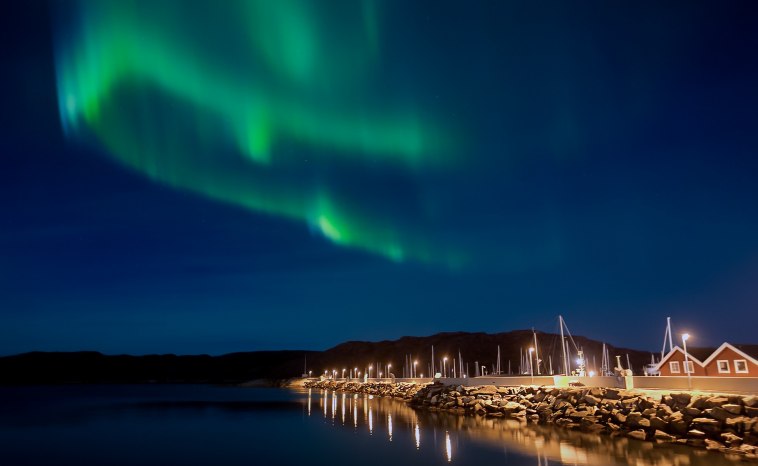
Not all effects are harmful! Solar storms create one of nature’s most breathtaking displays: the aurora borealis (Northern Lights) and aurora australis (Southern Lights). These occur when charged particles collide with Earth’s atmosphere, causing it to glow in shades of green, red, and purple.
Can We Predict Solar Storms?
Predicting solar storms is like forecasting the weather, only much, much harder! NASA, ESA, and other space agencies monitor the Sun with spacecraft like the Solar and Heliospheric Observatory (SOHO) and the Solar Dynamics Observatory (SDO).
These satellites track sunspots, flares, and CMEs, giving scientists a few hours to a few days’ warning. However, predicting a storm’s exact strength and impact remains difficult, especially since the orientation of a CME’s magnetic field determines how strongly it will interact with Earth.
New missions, like NASA’s Parker Solar Probe and ESA’s Solar Orbiter, are getting closer to the Sun than ever before, helping unlock the mysteries of its magnetic fields and activity.
Preparing for Solar Storms
Thankfully, governments and industries are starting to take solar storm risks more seriously. Steps include:
- Hardening power grids against geomagnetic currents.
- Improving satellite shielding and creating backup systems.
- Developing early-warning systems to give airlines and industries time to prepare.
- Encouraging international cooperation, since solar storms don’t respect borders.
For solar-conscious individuals, preparation might be as simple as keeping emergency supplies handy during extreme events – and enjoying the auroras if they appear!
Make the Cosmos Personal

If you’re fascinated by the power of the Sun and the mysteries of the night sky, why not make the stars part of your own story? With the Online Star Register, you can name a star for someone special, creating a personalised connection to the cosmos. It’s a unique gift that brings the wonder of astronomy a little closer to home!