What Is a Nebula?

Discover what a nebula is, how it’s formed, and why these glowing clouds of gas and dust are essential to the universe. Explore different types of nebulae in our in-depth guide!
Imagine the cosmos, and there’s a good chance you’ll think about glittering stars, distant galaxies, and dark, mysterious space. But aside from those A-listers, one of the most beautiful and fascinating objects you can see is a vibrant cloud of gas and dust that plays a vital role in both the birth and death of stars – a nebula. From forming new stars to marking the remnants of ancient supernovae, these cosmic clouds are far more than just pretty pictures from NASA!
In this article, we’ll dive into what a nebula really is, the different types of nebulae that exist, how they’re formed, and why they’re absolutely essential to our understanding of the universe.
What Is a Nebula?
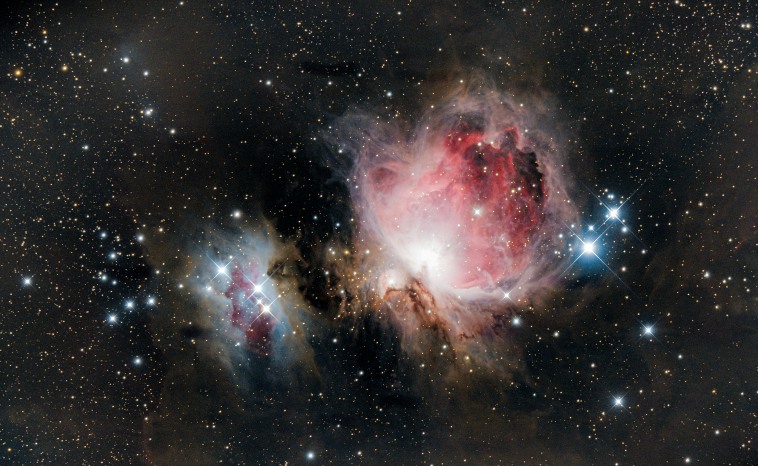
A nebula (plural: nebulae or nebulas) is a vast cloud of dust and gas in space. The term comes from the Latin word for “cloud”, and that’s actually a pretty accurate visual: nebulae often appear as colourful, billowing structures in astrophotography. These massive clouds can span hundreds of light-years, many of which serve as stellar nurseries, where new stars are born.
Nebulae are composed mainly of hydrogen and helium, the most abundant elements in the universe, with small amounts of heavier elements and interstellar dust. Depending on the type of nebula, they can either glow brightly from internal radiation or remain dark and nearly invisible until illuminated by nearby stars.
The Four Main Types of Nebulae
Astronomers categorise nebulae into several types based on how they form and behave. Here are the four main categories:
1. Emission Nebulae
These glowing clouds are the most iconic and visually stunning. Emission nebulae are lit from within by the ultraviolet radiation of nearby or embedded young stars. This radiation ionises the hydrogen gas, causing it to emit light, which is typically red due to the hydrogen-alpha emission line.
Example: The Orion Nebula (M42) is one of the most famous emission nebulae and is visible even to the naked eye in a dark sky. It’s an active star-forming region located about 1,344 light-years from Earth.
2. Reflection Nebulae
Unlike emission nebulae, reflection nebulae don’t emit their own light. Instead, they reflect the light of nearby stars. Because shorter wavelengths of light (like blue) scatter more easily, these nebulae often appear bluish in colour – similar to why our sky appears blue on Earth.
Example: The Pleiades Star Cluster is surrounded by a delicate blue reflection nebula, making it a favourite target for amateur astronomers.
3. Dark Nebulae
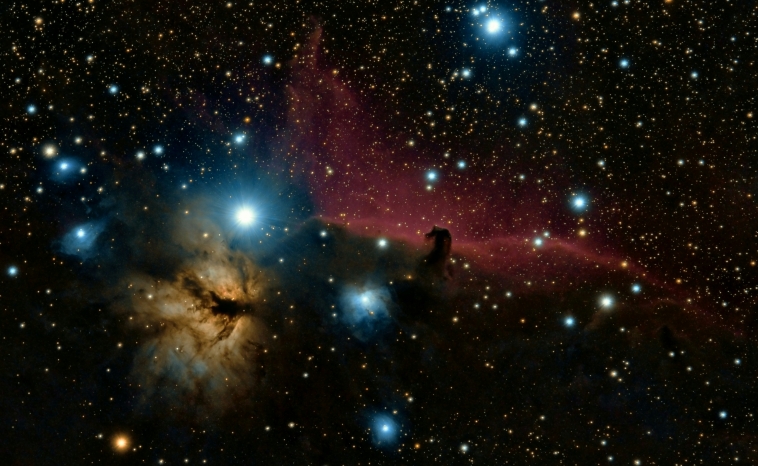
These are clouds so thick with dust and gas that they block light from stars and objects behind them. Often appearing as dark smudges against brighter star fields or glowing nebulas, we also sometimes call them absorption nebulae.
Example: The Horsehead Nebula in the constellation Orion is a classic dark nebula, silhouetted against the glowing emission nebula IC 434.
4. Planetary Nebulae
Despite their name, planetary nebulae actually have nothing to do with planets! The term was coined in the 18th century when early astronomers saw round, planet-like shapes in their telescopes. These nebulae are formed when dying stars shed their outer layers, creating an expanding shell of glowing gas.
Example: The Ring Nebula (M57) in the constellation Lyra is a beautiful planetary nebula, showcasing a vibrant ring structure left behind by a sun-like star.
How Do Nebulae Form?
Nebulae can form in several different ways depending on their type:
- Star Formation Regions: Giant molecular clouds – dense, cold regions of gas and dust – can collapse under their own gravity to form stars. This collapse often triggers the birth of a cluster of stars, with the surrounding gas forming an emission or reflection nebula.
- Supernova Explosions: When a massive star reaches the end of its life, it can explode in a supernova, ejecting material into space. This violent event can create a supernova remnant, a type of nebula composed of high-speed gas and particles.
- Stellar Winds and Radiation: In the later stages of a star’s life, particularly in red giant or white dwarf phases, it may shed its outer layers, forming planetary nebulae.
Each nebula is part of a cosmic cycle. Material from old stars forms the building blocks of new ones, spreading elements like carbon, oxygen, and nitrogen across the galaxy.
Famous Nebulae You Can See
The Orion Nebula (M42)
One of the brightest and most studied emission nebulae, the Orion Nebula lies in the “sword” of the Orion constellation. It’s a hub of star formation and an easy target with binoculars or a small telescope.
The Crab Nebula (M1)
Located in the constellation Taurus, the Crab Nebula is the remnant of a supernova that was observed by Chinese astronomers in 1054 AD. At its heart is a type of rapidly spinning neutron star called a pulsar.
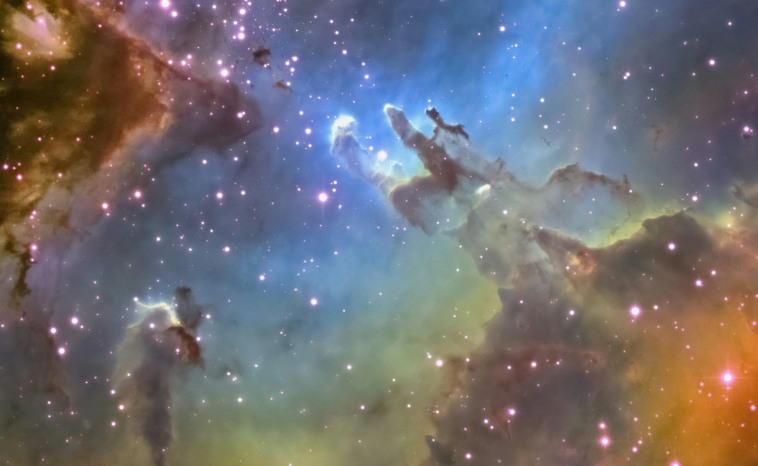
The Eagle Nebula (M16)
Home to the famous “Pillars of Creation,” which the Hubble Space Telescope famously photographed, this nebula is a region of intense star birth, showcasing towering columns of gas and dust.
The Helix Nebula (NGC 7293)
Often called the “Eye of God”, the Helix Nebula is a stunning planetary nebula located about 650 light-years from Earth in the constellation Aquarius.
How to Observe Nebulae Yourself
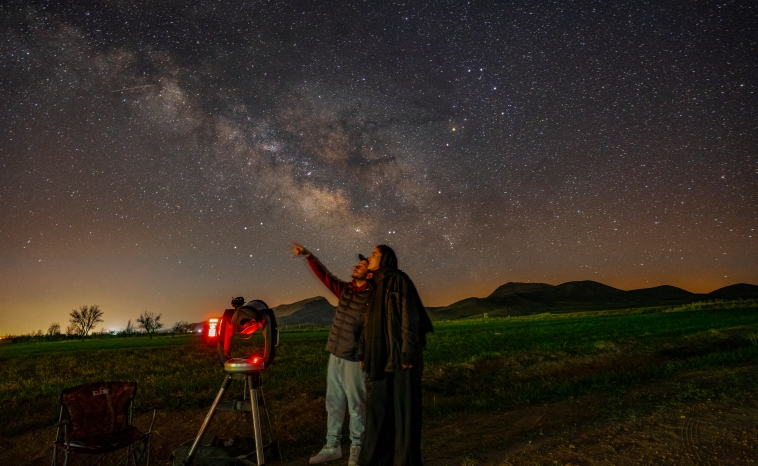
Unfortunately, the vast majority of nebulae aren’t visible to the naked eye. But with some basic stargazing equipment, you might be surprised at how many you can spot. And if you live in or can visit a dark-sky area, your results could be even better!
- Start with Orion: The Orion Nebula is a perfect target for beginners. Try to observe it in winter or early spring when Orion dominates the sky.
- Use Binoculars or a Telescope: Even a modest telescope can reveal structure and depth in nearby nebulae. A good star map or app, like the OSR Star Finder App, can help you locate them.
- Try Astrophotography: Nebulae really shine in long-exposure photography. Even amateur setups can capture stunning detail over time.
A Personal Connection to the Cosmos
Nebulae are among the most breathtaking and scientifically fascinating features of the universe. From birthing stars to marking their spectacular ends, they play a central role in the cosmic story. Whether you’re admiring photos from the Hubble Space Telescope or spotting the Orion Nebula through your own binoculars, nebulae invite you to ponder the beauty, scale, and wonder of space.
The shrouded wonder of nebulae is part of what makes space so captivating. They show us the universe is constantly changing, forming new stars and worlds while recycling the material of the old. And while you may not be able to visit a nebula in person, there are ways to connect with the stars from right here on Earth.
Why not create a lasting memory by naming a star for someone special? You’ll receive a custom star certificate, access to the OSR Star Finder App, and the ability to find your named star in the night sky. It’s a heartfelt way to bring someone closer to the cosmos – and perhaps, to a nearby nebula too!