How Do Astronomers Measure the Distance to Stars?
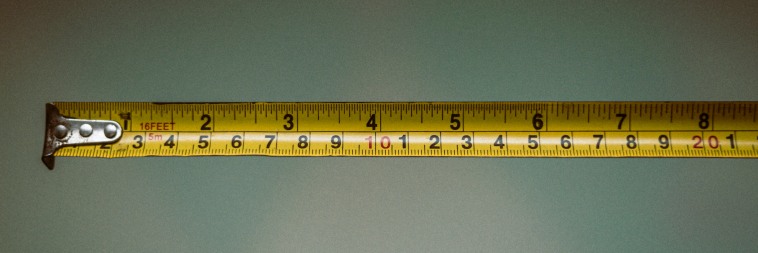
How do scientists measure the distance to stars? Learn about parallax, standard candles, and cosmic distance scales with our guide!
One of the most astonishing things about the night sky is how far away the lights we see really are. Even the closest stars are so distant that the idea of physically visiting them is almost impossible – our fastest spacecraft would take tens of thousands of years to get there. And yet, astronomers can measure the distances to stars with remarkable precision, without ever leaving Earth.
But just how do they do it? How can we know the position of a star, sometimes hundreds or thousands of light-years away, with such confidence? The answer lies in a combination of geometry, physics, and clever observation – a cosmic detective story that has unfolded over centuries!
Understanding Light-Years
Before going further, it’s worth clarifying what astronomers mean when they talk about distances in space. Simply put, a light-year is the distance that light travels in a year – which is around about 9.5 trillion kilometres. Remember, it’s not a measure of time, despite the name implies!
Using light-years helps put these staggering distances into perspective. When astronomers say a star is 500 light-years away, they mean the light you see tonight left that star 500 years ago. You’re literally seeing the past – a snapshot frozen in photons traveling across the galaxy.
The Simple Concept Of Parallax
The most fundamental method of measuring stellar distances is parallax. This technique is surprisingly simple in principle – and something you can test right now with your own eyes.
Hold your thumb at arm’s length and look at it with one eye closed. Now switch eyes. Notice how your thumb appears to shift slightly against the background? That shift is parallax – a change in the apparent position of an object when observed from different viewpoints.
Well astronomers apply that exact same principle to stars. They observe a nearby star from Earth at one point in its orbit around the Sun, and then again six months later from the opposite side of the orbit. Against the distant background stars, the nearby star appears to wobble ever so slightly. That wobble, measured in fractions of an arcsecond, allows scientists to calculate the star’s distance using basic trigonometry.
Parallax works best for stars that are relatively close to us – up to a few thousand light-years. Beyond that, the shifts become too small to measure accurately from Earth, and astronomers need other methods.
Variable Stars And Standard Candles

That means parallax can only get you so far. To measure distances beyond a few thousand light-years, astronomers rely on standard candles – objects whose intrinsic brightness is known. By comparing their true brightness to how bright they appear from Earth, scientists can estimate their distance.
Cepheid variable stars are one of the most important standard candles. These stars pulsate in size and brightness with a very precise relationship: the longer the pulsation period, the brighter the star. By observing how quickly a Cepheid brightens and dims, astronomers can determine its absolute luminosity and then calculate its distance.
This method allows scientists to extend their cosmic measurements deep into our galaxy and beyond.
Supernovae As Cosmic Yardsticks
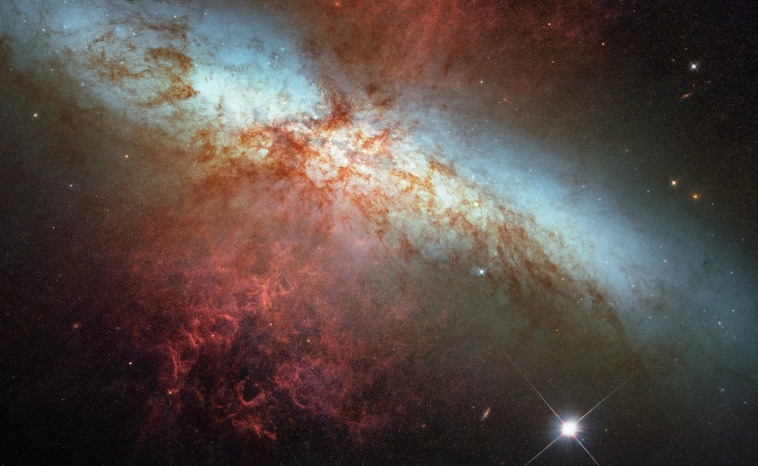
CREDIT: NASA, ESA, A. Goobar (Stockholm University), and the Hubble Heritage Team (STScI/AURA)
CREDIT: NASA, ESA, A. Goobar (Stockholm University), and the Hubble Heritage Team (STScI/AURA)For distances far outside the Milky Way, astronomers turn to Type Ia supernovae. These are catastrophic explosions of white dwarf stars, which occur under remarkably consistent conditions. Because their peak brightness is almost uniform, they serve as reliable beacons.
By observing how bright a supernova appears from Earth, scientists can determine how far away it is. This technique has been instrumental in mapping the universe and even led to the discovery that its expansion is accelerating – an absolute cornerstone of modern cosmology.
The Role Of Redshift In Extragalactic Measurements
When looking at galaxies far beyond our own, astronomers rely on redshift – the stretching of light waves as objects move away due to the universe’s expansion. The greater the redshift, the faster the galaxy is receding, and the farther away it must be.
Redshift doesn’t give the exact distance for nearby stars, but it’s essential for measuring the scale of the universe on cosmological scales. Combined with standard candles and other methods, it allows scientists to estimate distances to objects billions of light-years away.
Modern Astrometry: Gaia And Beyond
In recent years, missions like Gaia, launched by the European Space Agency, have revolutionised distance measurements. Gaia is mapping the positions, motions, and brightness of over a billion stars in the Milky Way with extraordinary accuracy.
With this data, astronomers can refine distance estimates for countless stars and build a detailed three-dimensional map of our galaxy. What was once guesswork based on brightness and wobble is now a precise measurement across vast stellar populations.
Visualising Distance At Home
Understanding how astronomers measure stellar distances gives you a new appreciation for the night sky. Each star you see is a marker of space and time, a beacon spanning unimaginable distances. Knowing its position and distance transforms it from a tiny dot of light into a real object in a vast cosmic landscape.
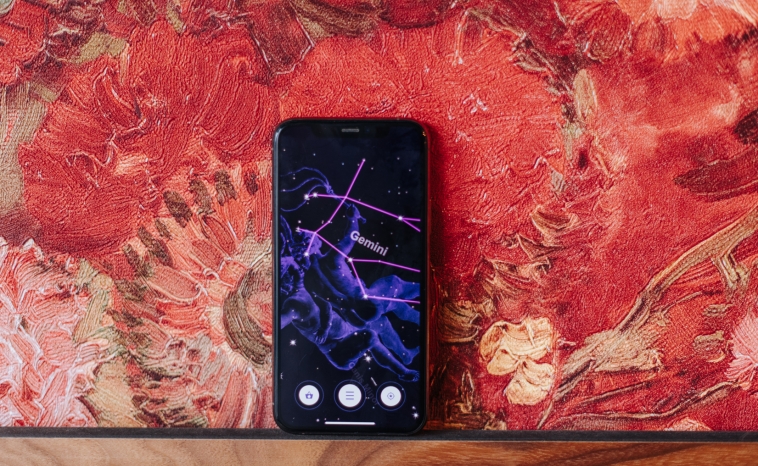
There are ways to bring these measurements into your own stargazing experience. The OSR Star Finder App, for instance, allows you to track stars from your exact location, showing not only their position in the sky but also their distances from Earth. You can see how the closest stars compare to the more distant ones, helping turn abstract numbers into tangible reality.
Download the OSR Star Finder App Today!