Curiosidades incríveis sobre a famosa estrela da manhã
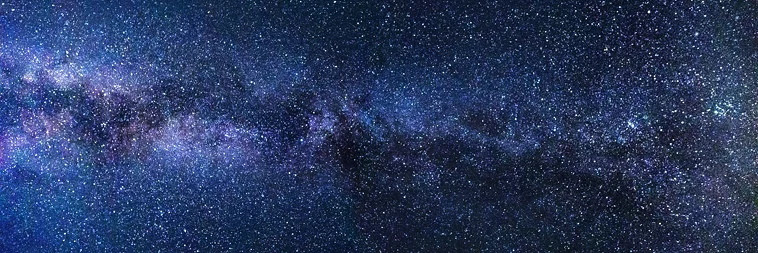
Sempre vai haver uma primeira estrela a aparecer, uma última estrela a se esconder do sol, e muitas vezes estas estrelas são consideradas como responsáveis por diversos simbolismos. A famosa estrela da manhã está entre as mais conhecidas estrelas, mas por acaso você sabia que ela na verdade nem é uma estrela, mas sim um planeta?
Ficou curioso? Então continue lendo para aprender mais sobre esta incrível estrela!
Venus is indeed the famous morning star, and it is also the second planet in order of distance from the sun in our solar system, completing its orbit every 224.7 days.
This planet was named after the famous Greco-Roman goddess, Venus, also known as Aphrodite. After the moon itself, the morning star is the most intensely bright celestial object in the night sky, having an apparent magnitude of -4.6, which is sufficient to produce shadows.
Details about the Morning Star and its relationship with Earth.
Since Venus is much closer to the sun than Earth, it can usually be seen in the same direction as the sun. It reaches its maximum brightness around a few hours before sunrise, or dawn, as some call it, which is why the planet is often known as the morning star, or evening star, sometimes also called the shepherd’s star.
Venus is widely known as a terrestrial planet, also called a telluric planet, and is considered Earth’s sibling, as both celestial bodies are extremely similar in size, mass, and composition.
However, Venus is covered by a thick, opaque layer of sulfuric acid clouds, which is extremely reflective, preventing its surface from being seen from ordinary visible outer space. Its atmosphere is very dense, being the densest of all the terrestrial planets in our solar system, and is mainly composed of carbon dioxide.
However, the morning star does not possess a carbon cycle to fix it in its rocks or any other type of component on its surface, and it does not even show any sign of organic life that could absorb carbon as biomass.
Scientists believe that Venus once had numerous oceans, just like Earth, but these evaporated as temperatures rose, leaving behind an extremely barren, dusty, and dry landscape with numerous plate-like rocks.
It is hypothesized that the water likely dissociated due to the complete absence of an electromagnetic field, causing the hydrogen to be swept into space by solar winds.
For a long time, the surface of Venus was the subject of much speculation, until some secrets were finally revealed by the incredible planetary science of the 20th century. It was in this century that the planet’s surface was finally mapped in detail by the amazing Magellan program.
The soil of the morning star exhibits ample evidence of intense and extensive volcanism, while the sulfur in the atmosphere may indicate that some eruptions were actually quite recent.
However, due to a lack of evidence of an existing magma flow accompanying the most visible calderas, it remains a huge enigma. Venus is a planet that doesn’t have many impact craters, which actually demonstrates that its surface is relatively young, with an approximate age of over 600 million years.
There is no evidence of the existence of tectonic plates, possibly because the planet’s crust is too strong to be reduced, as there is no water to make it less viscous.
The myths of the morning star
As one of the brightest objects in the entire sky, the morning star has been well-known since ancient times, even historically, and has thus gained an important position within human culture itself.
She was even described in Babylonian cuneiform texts, such as the famous Venus se ammisaduqa tablet, which reports various observations that very possibly date back to more than 1600 BC. The ancient Babylonians called the morning star Ishtar, the goddess and personification of femininity itself, as well as the goddess of love.
The Egyptians believed that Venus was actually two distinct bodies and thus knew the morning star as Tioumoutiri, and the evening star as Ouaiti. On the other hand, the Greeks called the morning star phosphorus, or Eoaphorus. Later, they changed the name to Aphrodite.
Meanwhile, it was the Romans who named the star Venus, but a Roman naturalist named Pliny ended up calling the morning star Isis in his studies. In Persian mythology, the planet was usually associated with the goddess Anahita. Several religions associated the morning star with some deity, especially those related to love and fertility.
For the Maya, this planet was essential, since their religious calendar was partially based on the movements of the celestial body, taking them into account to determine auspicious times for various events, such as wars and sacrifices.
Nothing is more symbolic than a star, and now you can give one as a gift to whomever you wish! Want to know how? Just click the button below!
Did you enjoy this article? Check out our other articles by visiting our blog using the button below!