Céu negro: uma vista fantástica que você não pode perder
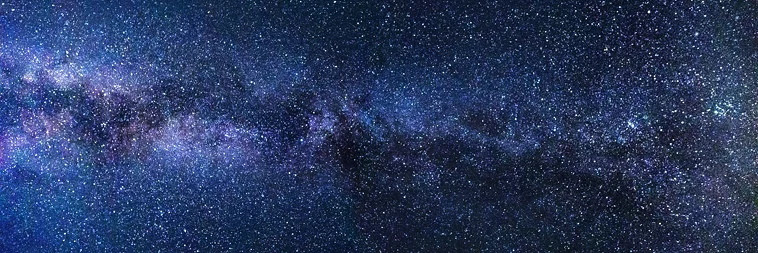
Você por acaso vive em um lugar onde existem muitas luzes artificiais? Se você vive, então provavelmente você nunca viu o que o céu noturno tem a oferecer de verdade. Leia mais sobre o Céu negro, aprendendo mais sobre esse ambiente fascinante.
Modern society is renowned for its advancements in telephones, medicine, cars, airplanes, and even the lights that illuminate cities. If you live somewhere with nighttime lighting, the likelihood that you haven’t yet seen the beauty of the night sky is extremely high. Living near a large city means the sky is affected by the effects of light pollution. But what does a dark sky really mean?
The disappearance of the night sky
According to a study published in Science Advances, we are getting closer and closer to losing our ability to see the night sky. This is happening because cities are increasingly becoming extremely bright points of light due to nighttime street lighting, which is often done thoughtlessly and sometimes is even useless in the way it is installed.
“An international team of researchers has created the most detailed atlas ever made on light pollution around the world. They estimate that the Milky Way is no longer visible to an entire third of humanity, including 60% of Europeans and 80% of Americans. The artificial lights of cities have created a permanent “glow” at night, which obscures our view of the stars” (Science Advances, 2016).
How severe is this pollution becoming? It is estimated that millions of children will never get to see our Milky Way in its natural state, only through a computer screen. According to one scientist, the ability to see the night sky is becoming increasingly worse.
“The fact is that many of the streetlights used at night are inefficient, too bright, and not properly shielded, and in many cases are completely unnecessary. The light and electricity used are scattered randomly across the sky, instead of focusing on the objects, people, or areas they should actually illuminate” (Carlson, 2016).
Light pollution
Some cities have implemented methods to lessen the impact of this type of pollution. For example, they have installed LED lights that illuminate concentrated areas. Additionally, they have installed sensors so that the lights are switched off if there is any movement. To illustrate the effects of this pollution, Mr. Carlson provides a photo of the same location, both artificially illuminated and then during a blackout. The photo clearly reveals what the night sky looks like when there is no light nearby.
The photo demonstrates what the night sky would look like if there were no light pollution. Consequently, astronomers build their observatories far from civilization. Finding a suitable location for an observatory has become increasingly difficult over the years. Concerned about this, a non-profit organization known as the International Dark Sky Association has been working to create more “dark sky” areas. They want to preserve and protect this incredible view of the night sky and inform people how they can help reduce light pollution.
This gesture is much more powerful than it appears to be, because it considers not only the experience of those who are here now, but also those in the future, waiting to see and experience all the splendor of the night sky whenever they look out the window, dreaming of what might be out there, simply watching us.
How to find areas of “black sky”
If you live in an area severely affected by this type of light pollution but still want to see the night sky, there are some resources that can help you. The International Dark-Sky Association offers an interactive map with “dark sky” locations in various countries. If you have a smartphone, you can do all this through an app called Dark Sky Finder, which helps you search for night sky observation areas. Also, here are some things you can do to reduce pollution.
- Inspect the lighting around your house.
- Use LED light bulbs in your home and workplace.
- Talk to your friends and neighbors about it.
If we all work together, we can enjoy the dark sky. For hundreds of years, people have found their inspiration in the stars, and we can all benefit from the stunning view that the sky above us can offer.
The truth is that seeing the untouched beauty of the cosmos is something few people have had the privilege of witnessing. This is because light pollution is increasingly taking over the world, so much so that several places have even become protected areas, usually around some kind of space observatory, all to keep the sky clean, clear as crystal, and full of the countless beautiful stars that our universe has to offer.
However small our actions may seem in changing the bigger picture, they are essential so that our children can enjoy one of the most beautiful things that creation has to offer.
Of all the mysteries of humanity, the cosmos is, without a doubt, the greatest of them all, and you won’t want your children to miss the opportunity to look out the window and imagine what exists out there, in the infinite immensity of the universe that expands every second.
How many stars are born and die every moment? How many lives emerge, how many evolutions occur? Let your children explore all these questions beneath the most beautiful starry sky, enjoying a privileged view of the Milky Way.
Furthermore, you can go a little further and give them a star as a gift! That’s right, who knows, with all this motivation, your child might end up conquering the stars, perhaps even becoming an astronaut?